From Weekend Hike to Homeowner: The Real Story Behind Americans Putting Down Roots in Monchique
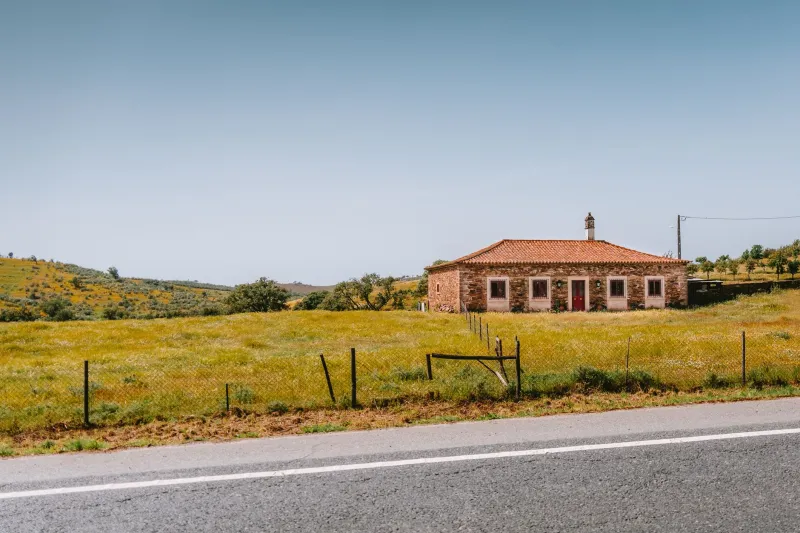
Sarah Kowalski from Denver wasn't looking to buy a house in Portugal. She'd booked a two-week trip to the Algarve, tacked on a few days in the Monchique mountains almost as an afterthought, and fully expected to be back at her marketing job by the third week of October. That was three years ago. Today, she owns a restored stone farmhouse about four kilometers outside Monchique town, rents it out for roughly six months a year, and spends the other half living what she describes as "the version of my life I didn't know I was allowed to have."
She is not alone. Not even close.
Talk to local real estate agents, expat community groups, or pretty much anyone running a guesthouse in this corner of the Algarve's interior, and a pattern emerges pretty quickly. Americans — often in their late 40s, 50s, or early 60s, though not exclusively — are arriving as visitors and leaving as prospective buyers. Some close a deal within months. Others spend a year or two circling back before committing. But the pipeline, by all accounts, is real and growing.
So what exactly is going on here?
The Monchique Difference: Why This Region and Not Somewhere Else
Portugal has no shortage of charming places where foreigners buy property. The Alentejo, the Douro Valley, the Silver Coast — all have established expat communities and well-worn buying processes. So why are so many Americans specifically gravitating toward Monchique?
Luís Ferreira, a Portimão-based real estate agent who's handled a significant uptick in Monchique inquiries over the past five years, has a theory. "The coast is beautiful, but it's also very... understood," he says. "People know what they're getting in Lagos or Albufeira. Monchique feels like a discovery. There's still a sense that you found something before the crowd did."
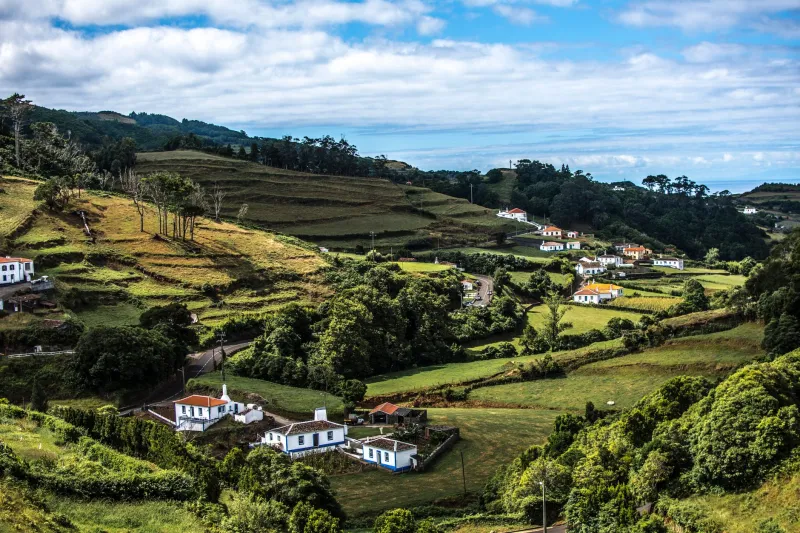
That feeling of authentic discovery is hard to manufacture, and it matters more than people might admit. Monchique sits at elevations between roughly 400 and 900 meters, draped in eucalyptus, cork oak, and medronho berry trees, with a cooler and wetter microclimate that feels genuinely different from the sun-baked coast just 30 kilometers away. The villages — Monchique town, Caldas de Monchique, Alferce, Marmelete — have retained a texture that more tourist-saturated destinations have largely lost. There are no beachside cocktail bars here, no souvenir shops selling ceramic roosters. There are bakeries that have been run by the same families for decades, a weekly market where locals actually shop, and a pace of life that doesn't perform itself for outside audiences.
For Americans burned out on the performance of modern life, that authenticity hits differently.
What Buying Actually Looks Like: Costs, Process, and Realistic Expectations
Let's get into the numbers, because this is where a lot of American buyers get surprised — usually pleasantly.
Property prices in Monchique remain genuinely low by both Portuguese coastal and US standards. Restored village homes and rural quintas (farmhouses with land) typically range from around €80,000 to €300,000 depending on size, condition, and location. Larger properties with more land and significant renovation needs can be found for less; fully renovated showcase homes with mountain views occasionally push higher. But compared to what you'd pay for a second home in, say, the Colorado Rockies or the Berkshires, the math is startling.
The buying process for non-EU citizens involves a few key steps. You'll need a Portuguese tax identification number (NIF), which is straightforward to obtain. You'll want to hire a local lawyer — not optional, genuinely essential — who will conduct due diligence on the property title, check for any outstanding debts or liens, and guide you through the promissory contract (CPCV) and final deed (escritura) stages. Legal fees typically run 1–2% of the purchase price. Transfer tax (IMT) is calculated on a sliding scale and can range from 0% on lower-value rural properties to around 8% on higher-value ones. Budget an additional 1–2% for notary and registration fees.
For Americans hoping to use the property as a primary or part-time residence, Portugal's D7 Passive Income Visa and the newer Digital Nomad Visa offer viable pathways. The Golden Visa program, which previously allowed residency through property investment, has been restructured — current rules limit it to specific low-density interior regions, and parts of the Monchique area may still qualify, though this is an area where legal advice is non-negotiable given ongoing regulatory changes.
Renovation costs are the wild card. Many of Monchique's most appealing properties are older stone structures that need real work. Local contractors exist and are generally more affordable than coastal equivalents, but supply can be stretched, timelines slip, and managing a renovation from 5,000 miles away requires either a very good local project manager or a very high tolerance for uncertainty. Most experienced buyers recommend spending significant time in the area before committing to a major renovation project — not just to vet the property, but to build relationships with local tradespeople and understand what realistic timelines actually look like.
The Lifestyle Math: What You're Actually Trading and What You're Getting
Mark and Jennifer Ostrowski, a retired couple from outside Philadelphia, spent 18 months researching European property markets before settling on a small quinta near Alferce. "We looked at Tuscany, we looked at southern France, we looked at the Alentejo," Jennifer says. "Everywhere else, we felt like we were buying into a postcard. Monchique felt like we were buying into a real place."
The lifestyle arithmetic they describe is one that more Americans are running. Healthcare in Portugal is accessible and significantly less expensive than in the US. The cost of groceries, dining out, and day-to-day living is notably lower. The climate — mild winters, warm but not punishing summers at elevation — is genuinely livable year-round in a way that few European mountain destinations can claim. And the proximity to the Algarve coast means you're never more than 45 minutes from an international airport, beaches, and all the infrastructure of a well-developed tourist region.
What you give up, or at least adjust to: the pace of bureaucracy (Portuguese administrative processes run on their own timeline), the language barrier (English is spoken in tourist areas but less so in rural villages, and learning some Portuguese goes a long way toward genuine integration), and the isolation that can feel magical for a vacation but occasionally challenging during a long, rainy January.
But ask most American buyers whether they'd make the same decision again, and the answer is almost uniformly yes — often with the caveat that they wish they'd done it sooner.
What the Locals Think
It's worth asking, because not every community embraces an influx of foreign buyers with open arms. Monchique's relationship with outside investment is nuanced. There's genuine appreciation for the economic activity that restoration projects and year-round residents bring to a region that has historically struggled with rural depopulation. There's also, among some longtime residents, a watchfulness about whether the character of the place will survive its own discovery.
The consensus among the Americans who've integrated most successfully seems to be: show up with humility, learn the language at least partially, spend your money locally, and don't try to recreate the life you left. Monchique isn't a backdrop for an American lifestyle transplant. It's a place with its own deep rhythms, and the people who thrive here are the ones who come to join those rhythms rather than override them.
Sarah Kowalski, back in her farmhouse outside town, puts it simply: "I came here thinking I was on vacation. I stayed because I realized I'd been waiting my whole life for somewhere that felt like this." She pauses, then laughs. "Also the property was €115,000. That helped."
For anyone curious about making a similar move, the resources are out there — local agents, expat forums, legal specialists who work with American buyers regularly. The mountain is patient. It'll wait while you figure out whether you're serious.