From Two Weeks to Forever: Why Americans Are Quietly Buying Into Monchique's Mountain Villages
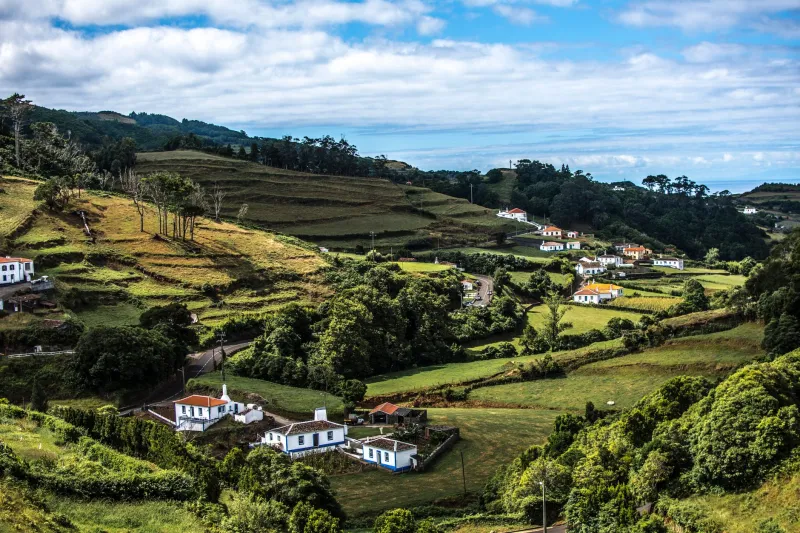
Karen Albright flew into Faro in October 2019 with a carry-on bag, a two-week itinerary, and absolutely no intention of buying a house in Portugal. She flew home six months later as the owner of a 200-year-old stone farmhouse on a hillside above Caldas de Monchique, with eucalyptus trees on three sides and a view that, as she puts it, "made me stop being afraid of getting older."
Her story isn't unique. Spend any time in the cafés and trailheads around Monchique and you'll run into a version of it again and again — the American visitor who came for the hiking, stayed for the silence, and ended up signing paperwork they never planned to sign. There's even a name for it among the expat community that's slowly forming in these hills: the Monchique Effect.
So what exactly is happening here, and is it actually a smart move?
Why Monchique and Not the Algarve Coast?
The Algarve has been on the American radar for years. Lagos, Albufeira, Tavira — these coastal towns get the magazine spreads and the retirement blog posts. Monchique, sitting roughly 30 kilometers inland in the Serra de Monchique mountain range, has traditionally been what you drive through on the way to the beach.
That's changing, and the reasons aren't hard to understand once you've spent time there. The coast, beautiful as it is, has priced out many buyers who arrived a decade too late. Beachfront and near-beach properties in the central Algarve now routinely list in the €400,000 to €700,000 range for anything remotely livable. Monchique's villages — Monchique town itself, Caldas de Monchique, Alferce, Marmelete — offer a dramatically different calculus.
"I looked at apartments in Lagos for three days and felt my retirement savings evaporating in real time," says David Ferreira, a retired software engineer from Austin who now lives year-round in a renovated quinta outside Alferce. "Then a friend suggested we drive up into the mountains. We found a three-bedroom stone house with land for €185,000. I thought there was something wrong with it."
There wasn't.
The Numbers, Honestly
Property prices in the Monchique region remain genuinely affordable by both Portuguese coastal and American standards. Depending on condition and location, you're looking at roughly €80,000 to €150,000 for a village house requiring renovation, €150,000 to €300,000 for something move-in ready with land, and upward of €350,000 for larger quintas with outbuildings, orchards, or significant acreage.
Those figures don't include renovation costs, which can be substantial for older stone properties. Budget-conscious buyers typically set aside 20 to 40 percent of the purchase price for structural work, plumbing, and electrical upgrades. Portuguese construction costs are still considerably lower than in the US, but they're rising, and the labor market in rural areas can mean longer timelines.
The tax picture deserves a serious conversation with a Portuguese tax attorney before you commit to anything. Portugal's Non-Habitual Resident (NHR) regime, which offered flat-rate income tax benefits for foreign residents, has been restructured. The updated IFICI regime — aimed at attracting specific professional and investment categories — has different eligibility requirements. For retirees drawing US Social Security or pension income, the situation varies based on individual circumstances, and the US-Portugal tax treaty adds another layer of complexity. This is not the place to rely on Facebook group advice.
Cost of living, however, is where Monchique genuinely delivers. Groceries run roughly 40 to 50 percent less than in most US cities. Utilities for a well-insulated mountain home average €80 to €150 per month. Healthcare through Portugal's public system is accessible to legal residents, and private health insurance for a healthy American in their 50s or 60s typically runs €100 to €200 per month.
The Legal Path In
Buying property in Portugal as an American is legally straightforward, but it has steps that require professional guidance. You'll need a Portuguese tax identification number (NIF), a Portuguese bank account, and a licensed real estate attorney — ideally one fluent in both English and the specific quirks of rural property law, which can include land registry issues, agricultural classifications, and water rights that don't always show up in the initial listing.
The Golden Visa program, once a popular route for non-EU buyers seeking residency through property investment, has been significantly modified and no longer applies to most residential real estate purchases. Americans seeking legal residency now typically pursue the D7 Passive Income Visa, which requires demonstrating sufficient monthly income (currently around €820 per month at minimum, though in practice immigration attorneys recommend showing considerably more) and spending meaningful time in Portugal.
Full residency, and eventually citizenship eligibility, requires spending at least six months per year in Portugal. Many American buyers in Monchique start as part-time owners, spending three to four months annually before committing to full residency — a practical approach that also lets you experience the region across seasons before you're fully committed.
What Life Actually Looks Like
Monchique is not Lisbon. It is not the Algarve coast. If your ideal retirement involves walkable restaurants, international airports within twenty minutes, and a social scene built around other expats, this is not your place — or at least, not yet.
What you get instead is something harder to quantify. The Serra de Monchique is legitimately one of the most beautiful landscapes in southern Europe, with trails through ancient cork oak forests, ridgelines that look out over both the Atlantic and the Spanish border, and a pace of life that feels genuinely therapeutic after decades of American-speed living.
The nearest large supermarket is in Portimão, about 25 kilometers downhill. The regional hospital is there too. Monchique town has a pharmacy, a health center, a handful of restaurants, and a small but growing community of international residents. Caldas de Monchique — the thermal spa village in the valley — has a more tourist-facing infrastructure but a smaller permanent population.
"People ask me if I get bored," says Karen, the accidental farmhouse owner. "I walk every morning. I have a garden that actually produces food. I cook real meals. I sleep eight hours. I've read more books in two years here than in the previous decade in Phoenix." She pauses. "I'm not bored. I was bored before."
Before You Start Browsing Listings
A few things worth knowing before the Monchique Effect takes hold on you personally. Rural Portuguese properties often come with complicated histories — boundary disputes, shared access roads, inheritance complications spread across multiple family members. A thorough due diligence process, including a full title search and structural survey, is non-negotiable.
Learn at least basic Portuguese. Monchique's older residents speak little to no English, and the warmth of village life depends significantly on your willingness to meet people where they are linguistically. Locals are patient and generous with beginners, but the effort matters.
And visit in February before you buy. The mountains in winter are stunning but wet, the days are short, and the isolation is real. If you love it in February, you'll love it year-round. If you're miserable, you've saved yourself a very expensive mistake.
For those who do make the leap, the consensus among Monchique's growing American community is consistent: the hardest part was deciding. After that, the mountains tend to take care of the rest.